
 Image 1 of 6
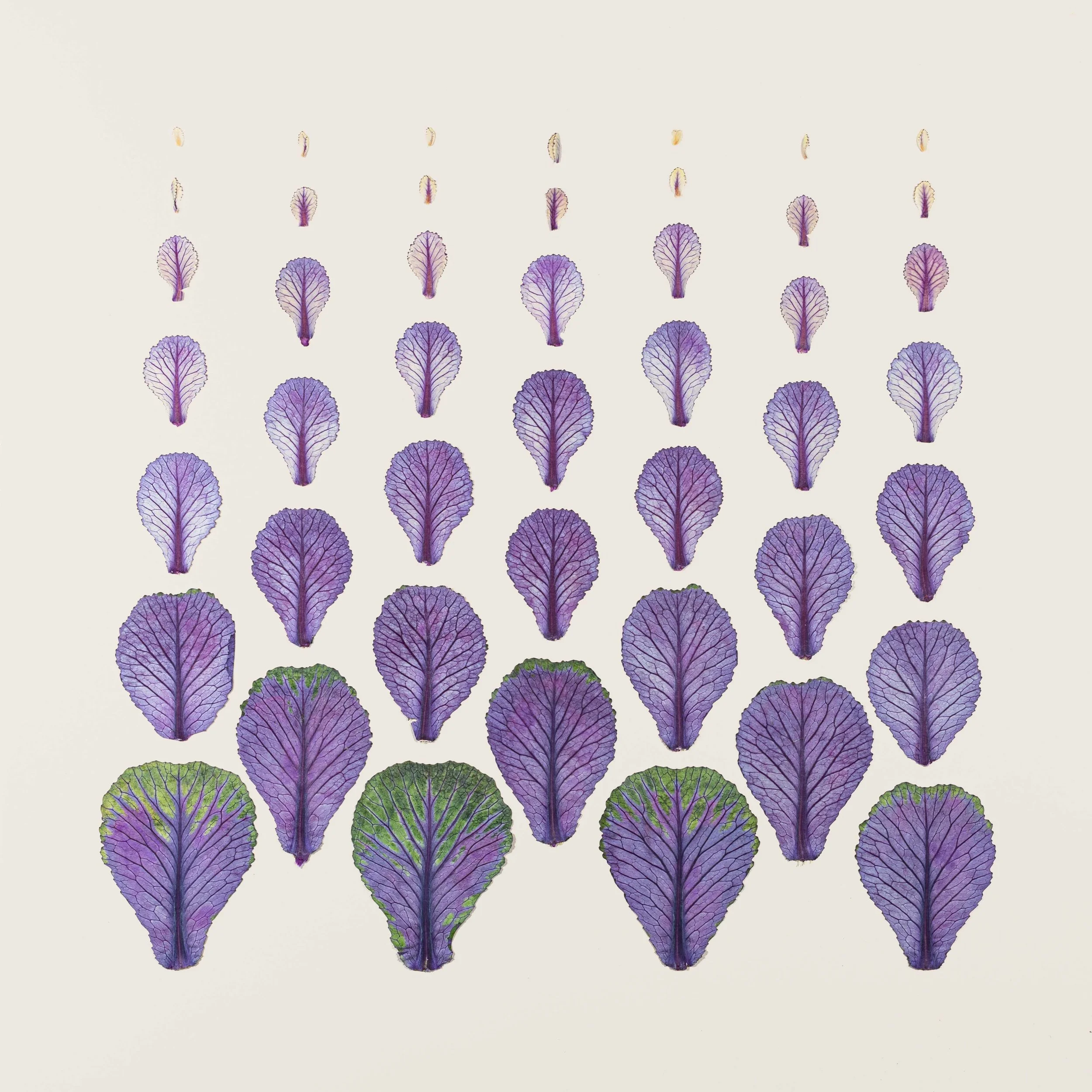 Image 2 of 6
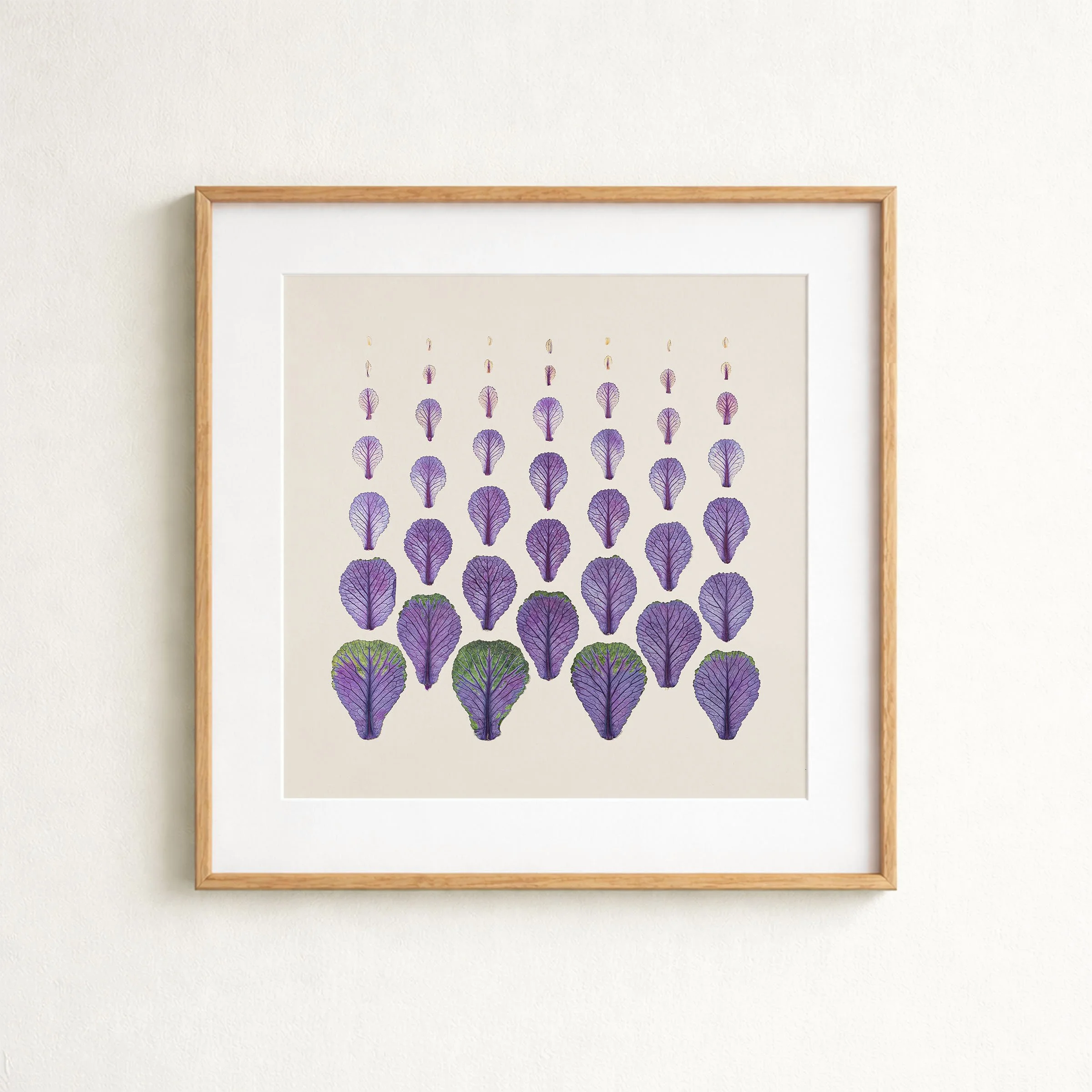 Image 3 of 6
 Image 4 of 6
 Image 5 of 6
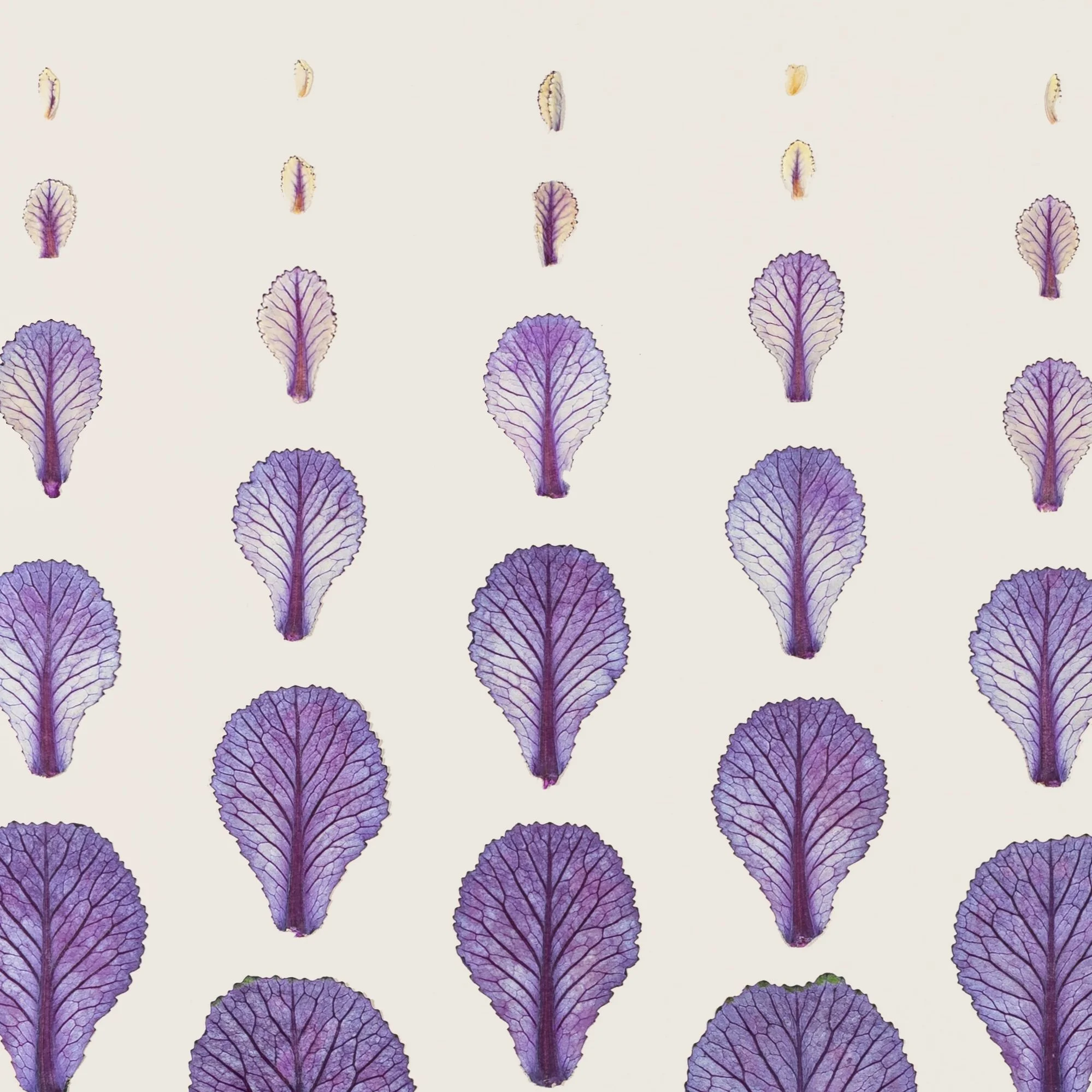 Image 6 of 6
Artist’s notes
—Sherin Siew
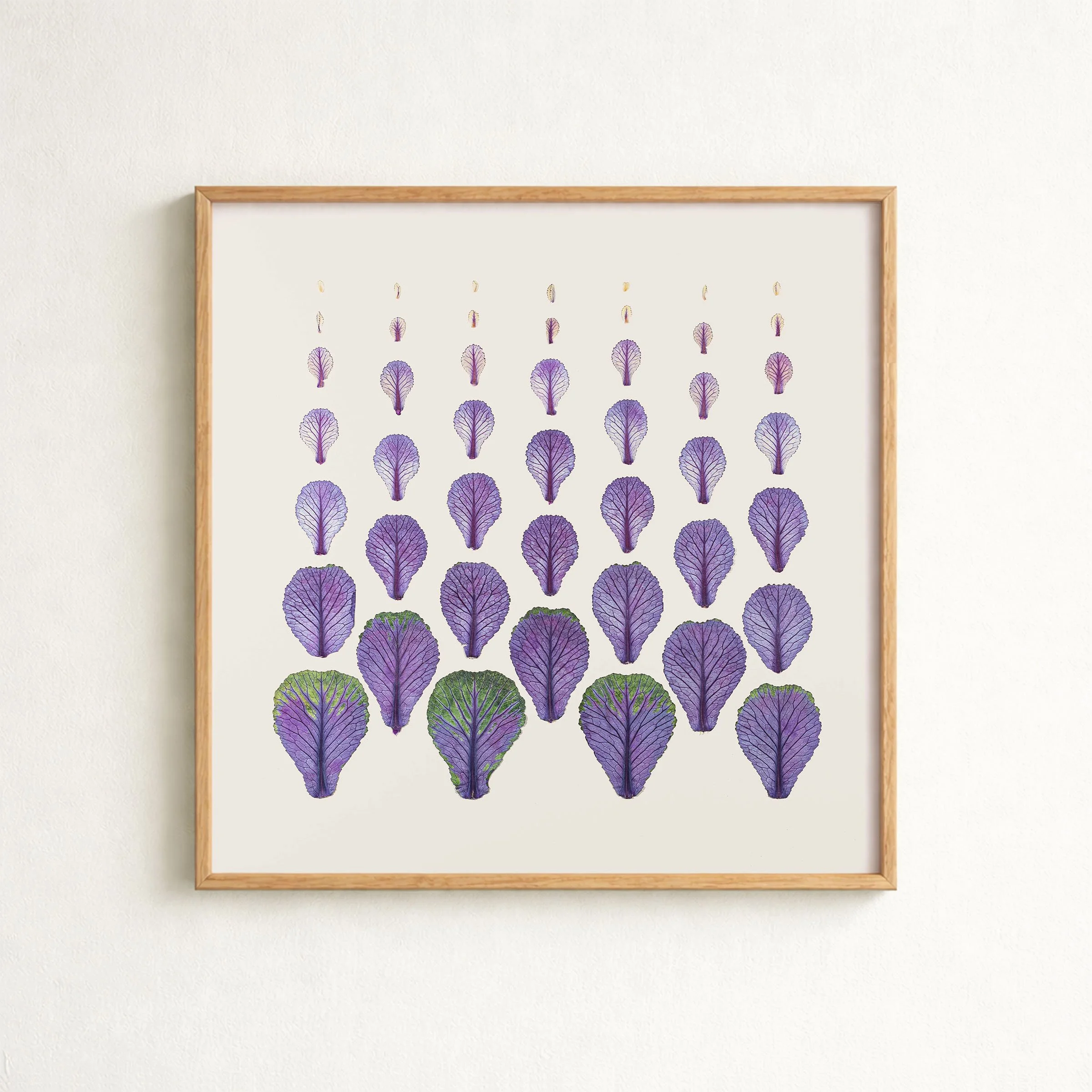
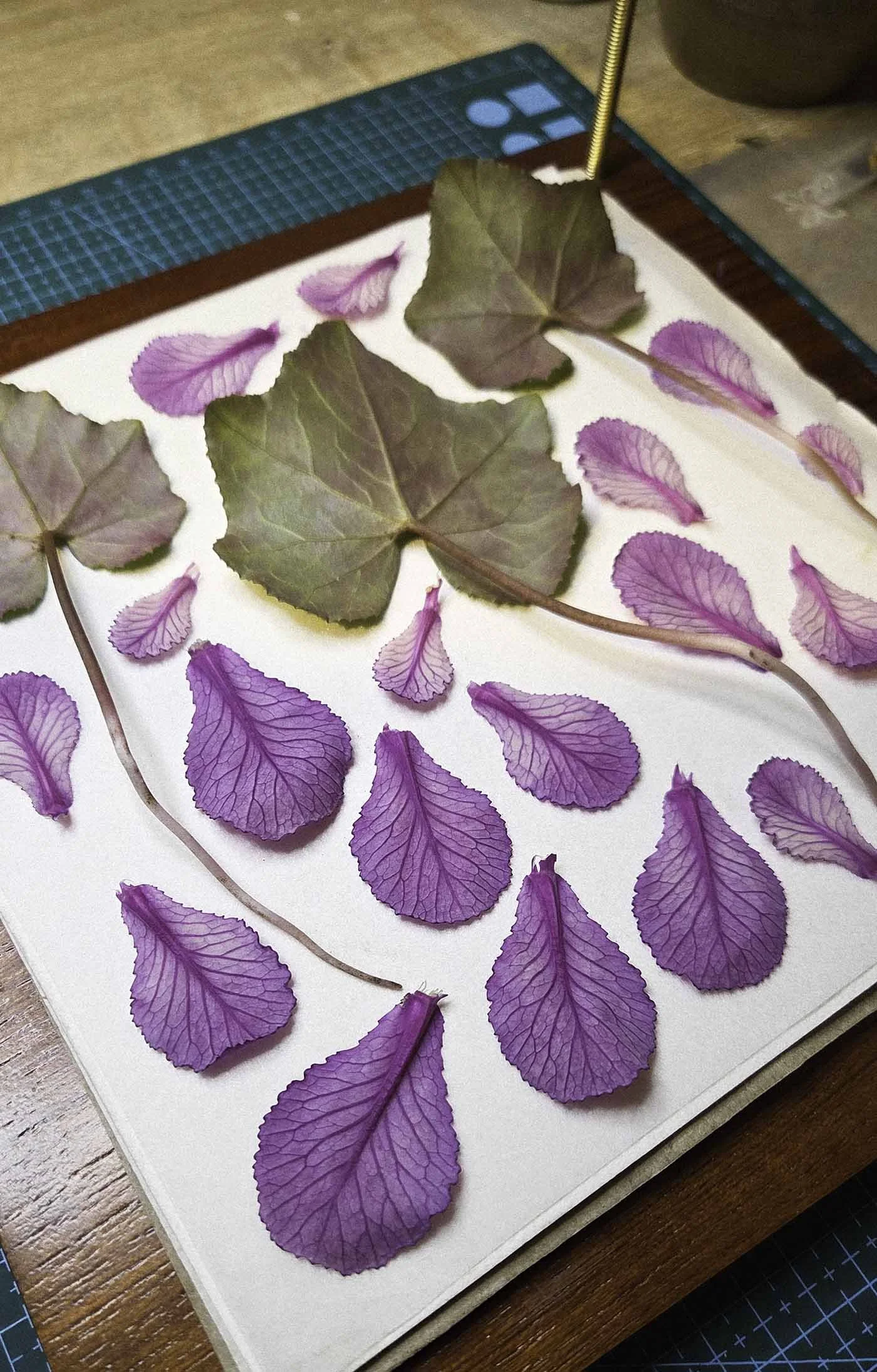
An orchard-like field of leaves, arranged in a quincunx pattern by size and colour.
From pale inner growth to violet and then green outer leaves, the structure reads like a map of function — protection, development, productivity.
Scientific notes
—Dr. Radhika Desikan
Ornamental cabbage — Origins of species
Ornamental (or wild) cabbage is the single magical species from which different edible Brassica crops originate. These include cabbage, brussels sprouts, kohl rabi, kale, cauliflower and broccoli, each selectively bred for different edible plant parts (e.g. terminal bud for cabbage, stems and flowers for broccoli).
They are all part of the same family, Brassicaceae, and all contain the chemical glucosinolate, which gives the pungent odour, and repels many herbivores. In the ornamental cabbage shown, can you notice the size and colour of each leaf? What causes this variation in foliage?
Plant colours arise from several groups of pigments, amongst which anthocyanidins and chlorophyll play important roles. Anthocyanidins, which include pigments that yield the purple colour, are produced as the very young leaf grows.
Notice the smallest, pale leaves that gain purple coloration as they develop. This pigment protects juvenile, innermost leaves from harmful UV radiation, intense sun, as well as pathogens.
As the leaf gets older (larger), it accumulates the green pigment, chlorophyll, which not only transforms the sun’s energy through photosynthesis, but also adds enhanced protection from intense sun. This takes over the role of anthocyanidins, as seen with degradation of the purple coloration in older leaves. Shifting colours for changing behaviour.