
 Image 1 of 6
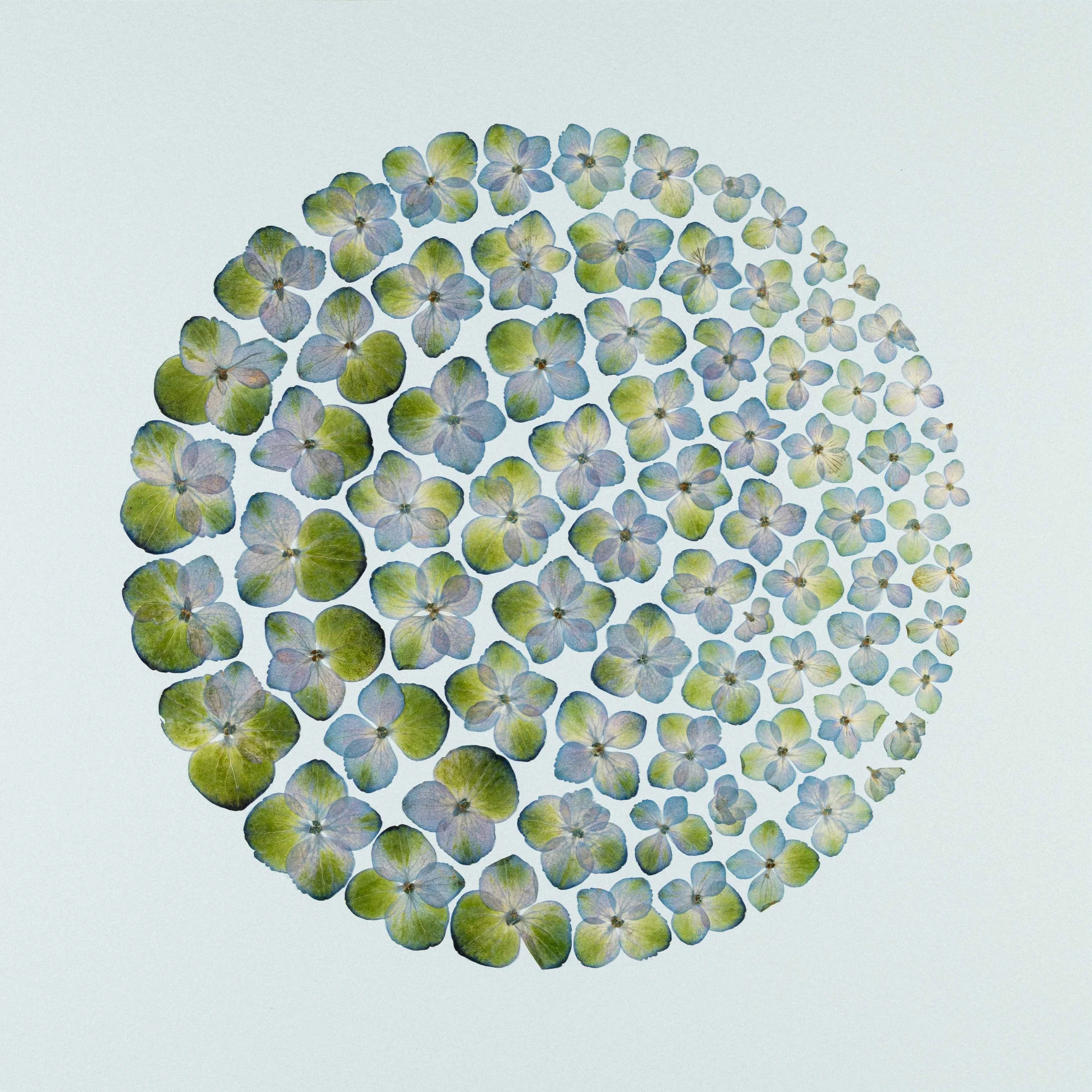 Image 2 of 6
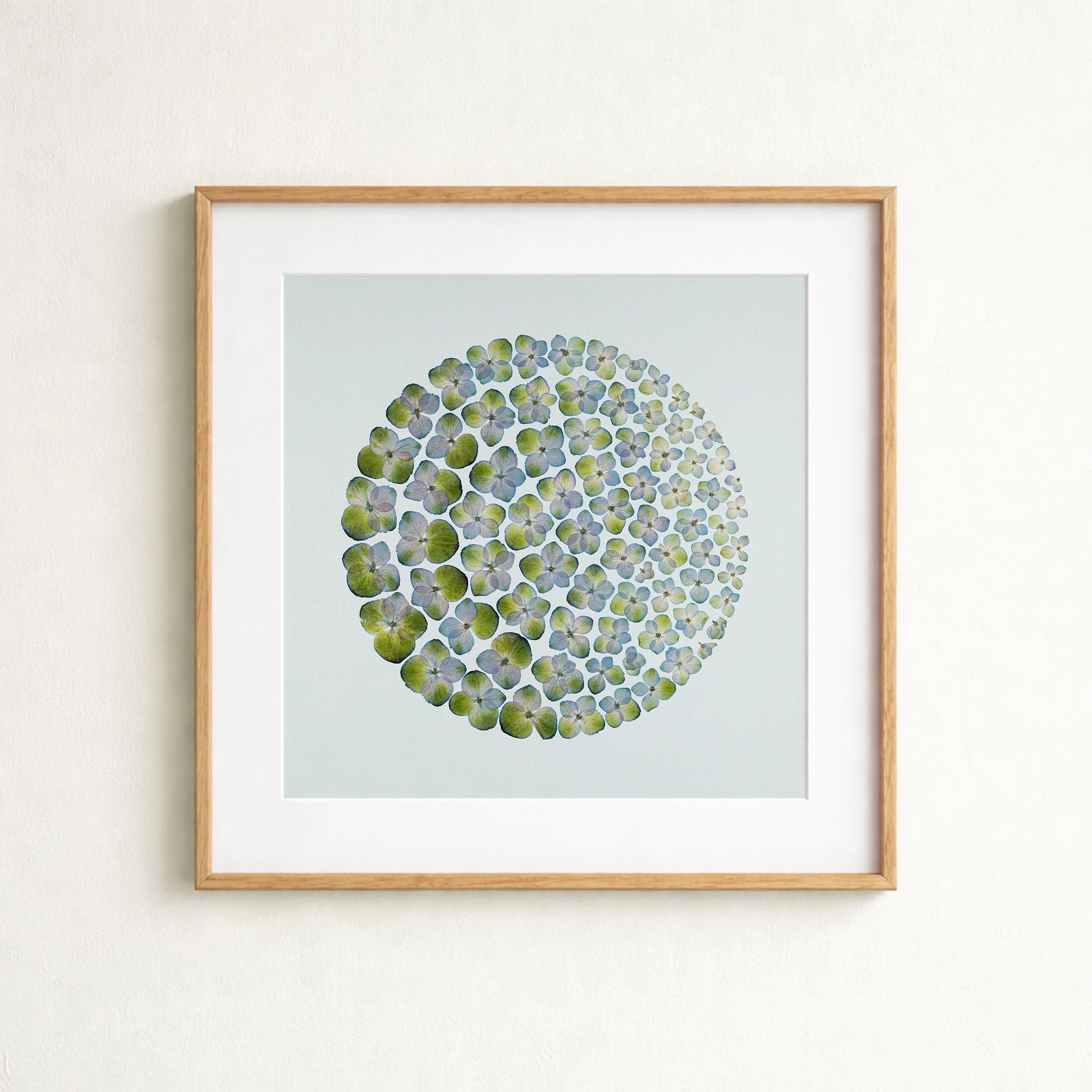 Image 3 of 6
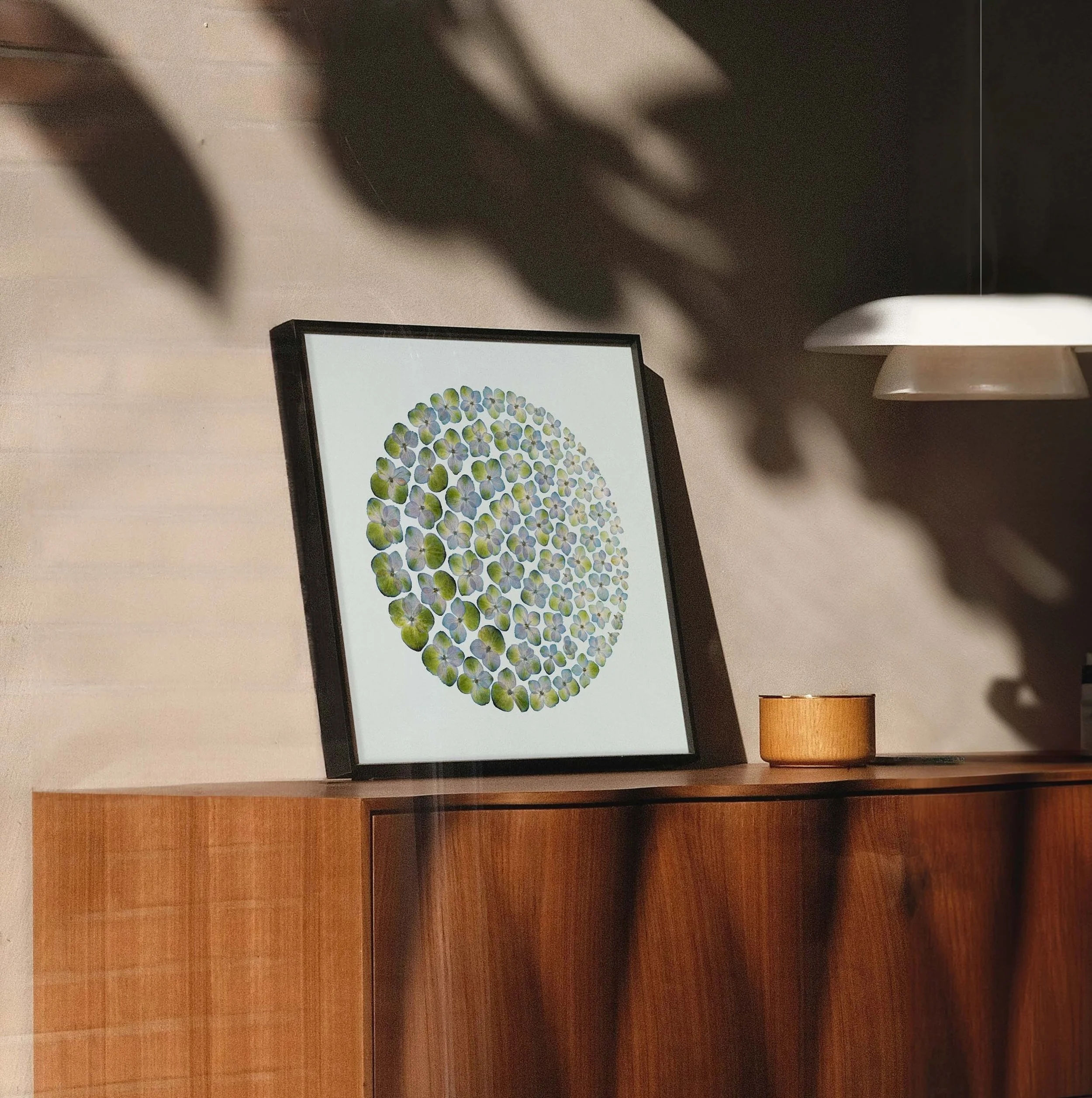 Image 4 of 6
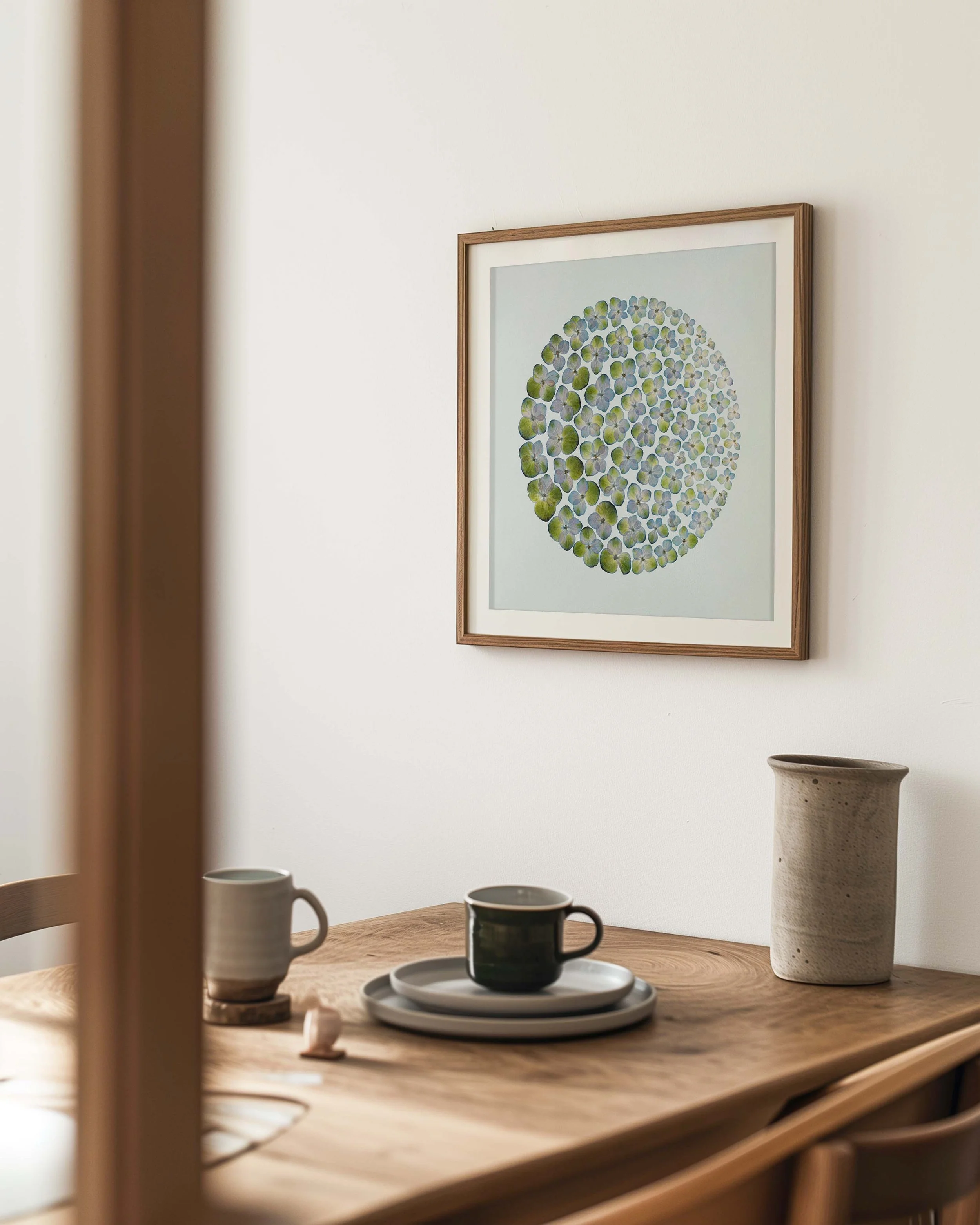 Image 5 of 6
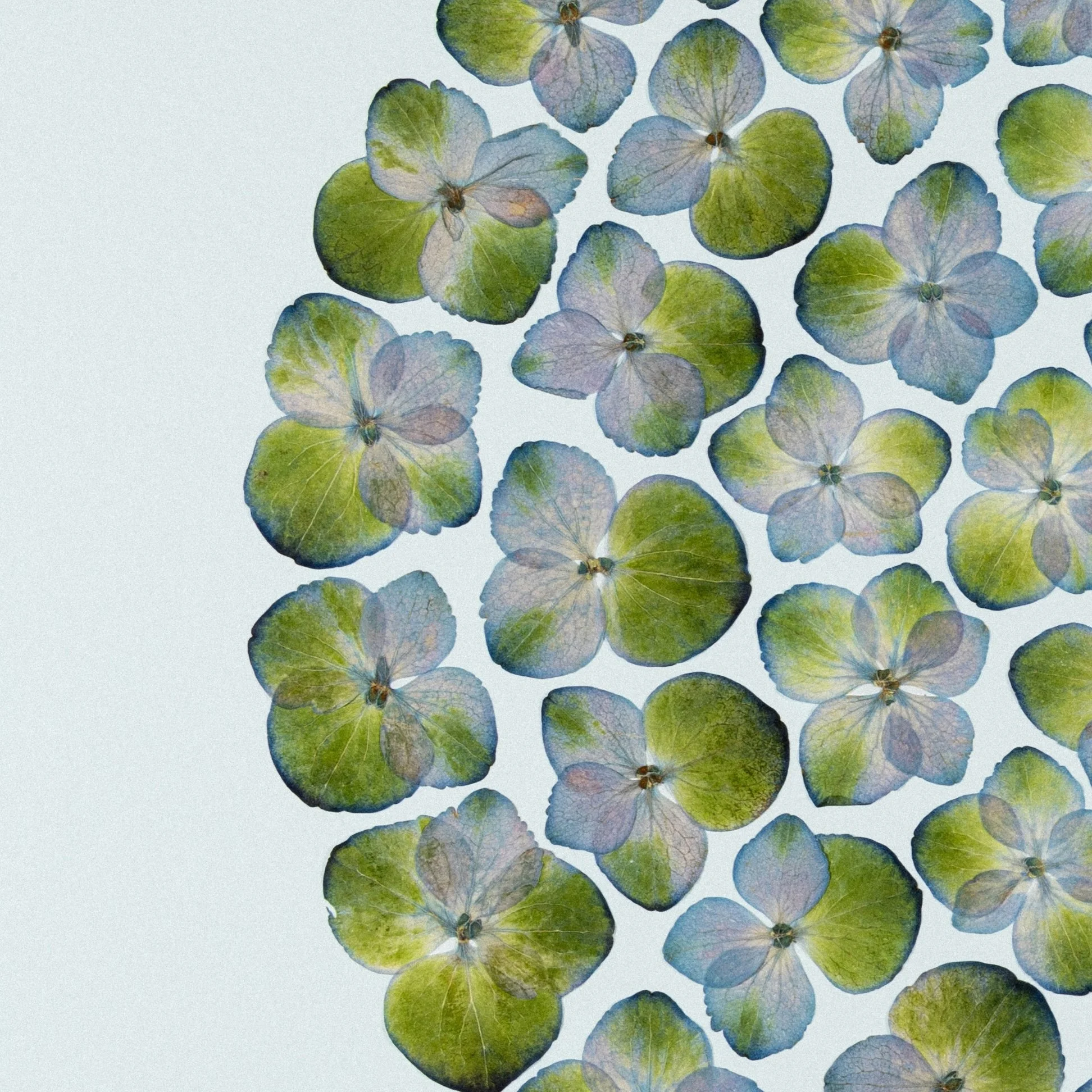 Image 6 of 6
Artist’s notes
—Sherin Siew
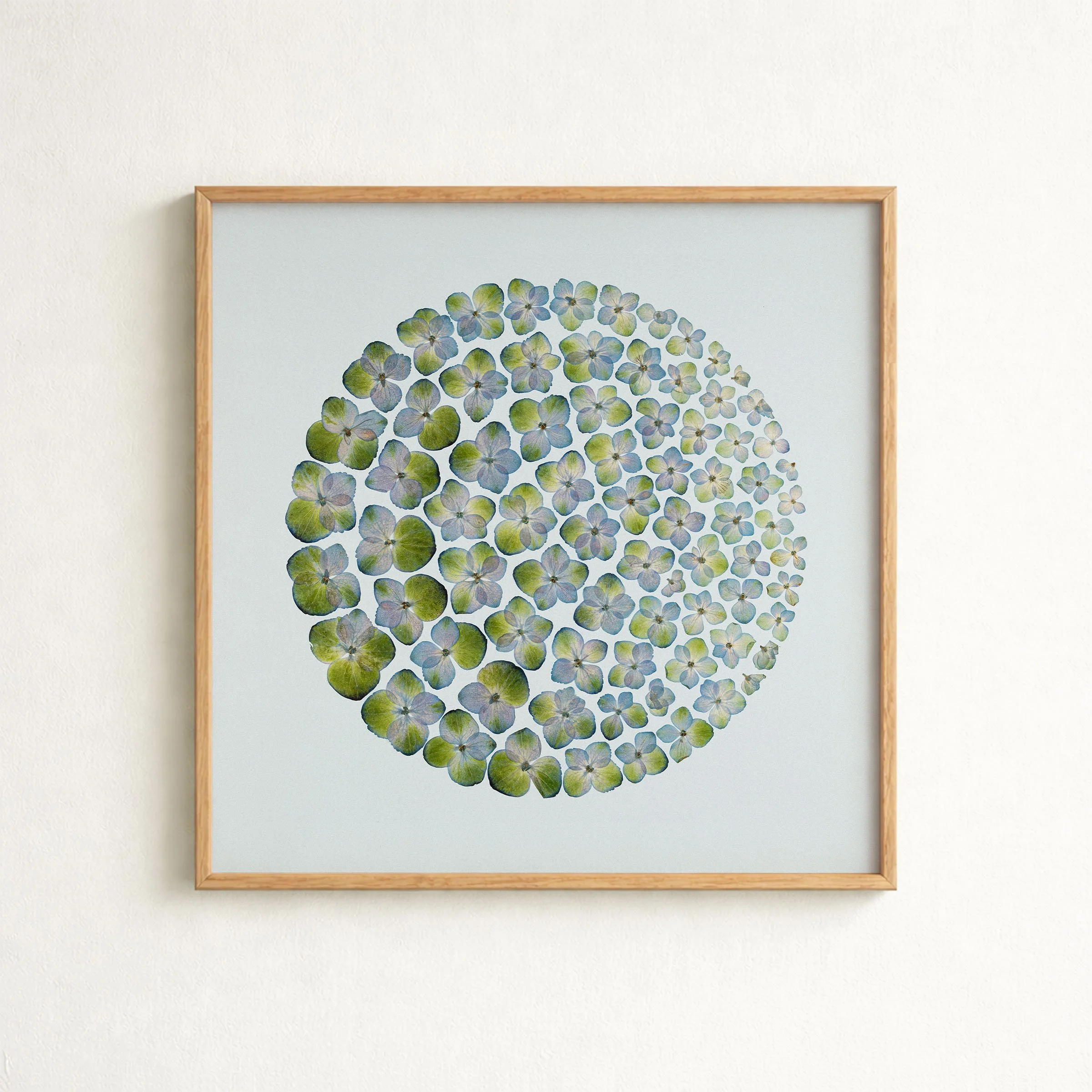
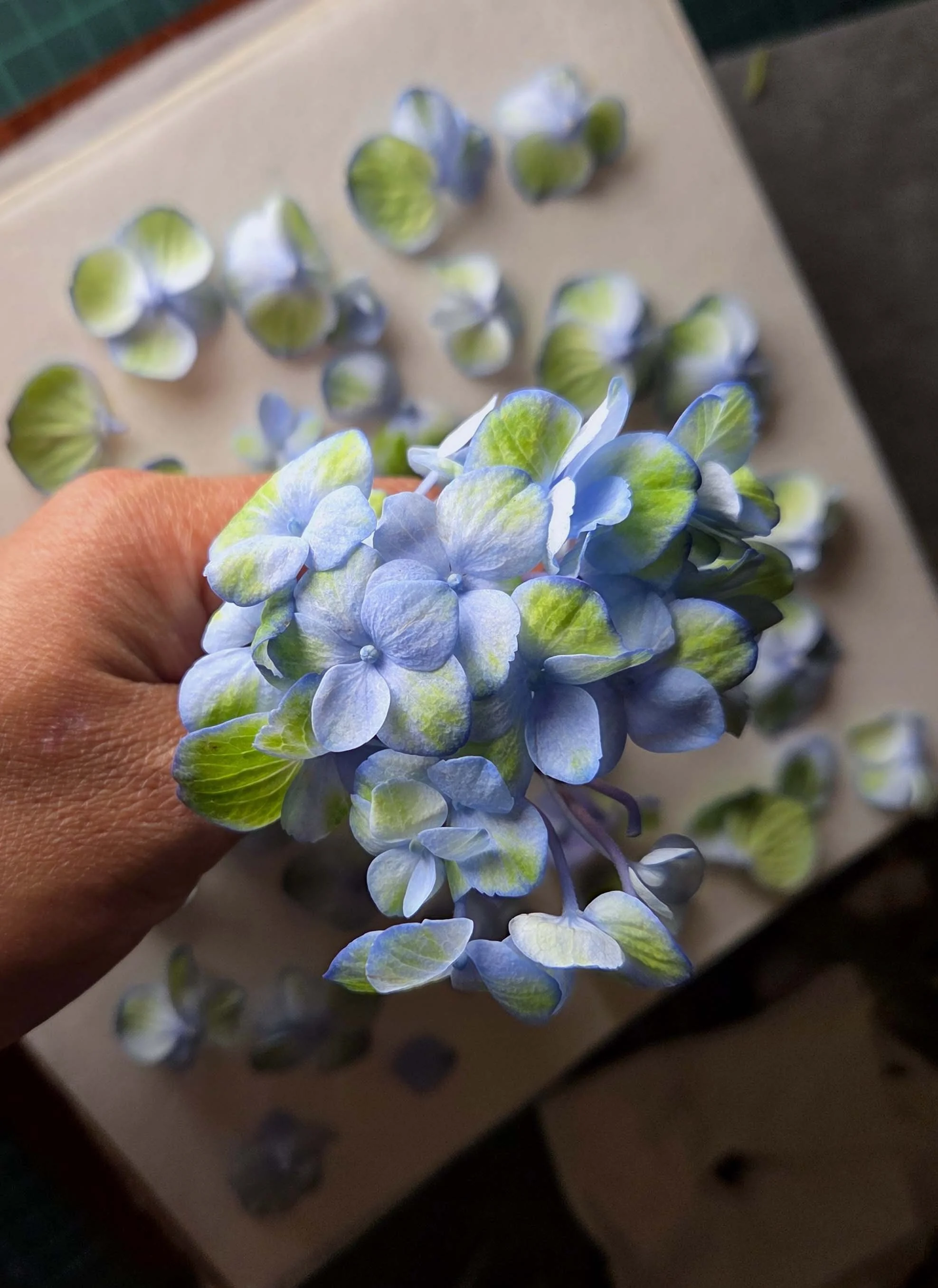
These large, showy structures most associate with hydrangeas are not petals, but sepals — modified leaves that protect and support the flower. The true flowers are short-lived, small and located at the center of each bloom cluster.
Hydrangeas are known for their colour shifts. Here, that variation unfolds within a single head — navy at the tips, moving through green and blue, to the faintest hint of pink and purple at the centre. The greens are the last traces of chlorophyll as the sepals mature.
A continuous drift of scale, shape, and colour, no two sepals the same. Yet packed in a disc, the sepal geometry and gradients draw organic variations into a cohesive whole.
Scientific notes
—Dr. Radhika Desikan
Hydrangea — Chemical colour shifts
The dramatic colours of hydrangea inflorescences are governed by their pigment chemistry. Anthocyanidins are a family of pigments that control the red-orange pigments in flora, but also include delphinidins, yielding the purple-blue colour. Normally, flower colour is determined by combinations of different pigments, but with hydrangeas, it is limited to only delphinidins. How can one chemical cause colour shifts?
Horticulturists know that when the soil pH is acidic (low) and contains aluminium, the bloom is blue, and in alkaline pH (high) it is reddish. However, it is the cellular pH which changes delphinidin structure, and therefore colour (low pH: red, high pH: blue). Hydrangea exudes citric acid from its roots which detoxifies soil aluminium, then absorbing and distributing it throughout the plant. The cells in sepals with low pH use aluminium and delphinidin to shift from red to blue colouration, with their ratio controlling blueability (observe the shades).
Scientists have now developed sprays which contain different metals that can cause colour shifts and patterns in hydrangeas, obviating the need for aluminium in soil. In this species, the colourful “mopheads” are sterile, hiding the small, fertile flowers. So humans, not pollinators, are satisfied with this colourful addition to gardens.
More from the Scope series
Circular compositions exploring plant structure through the lens of art, design, and science.
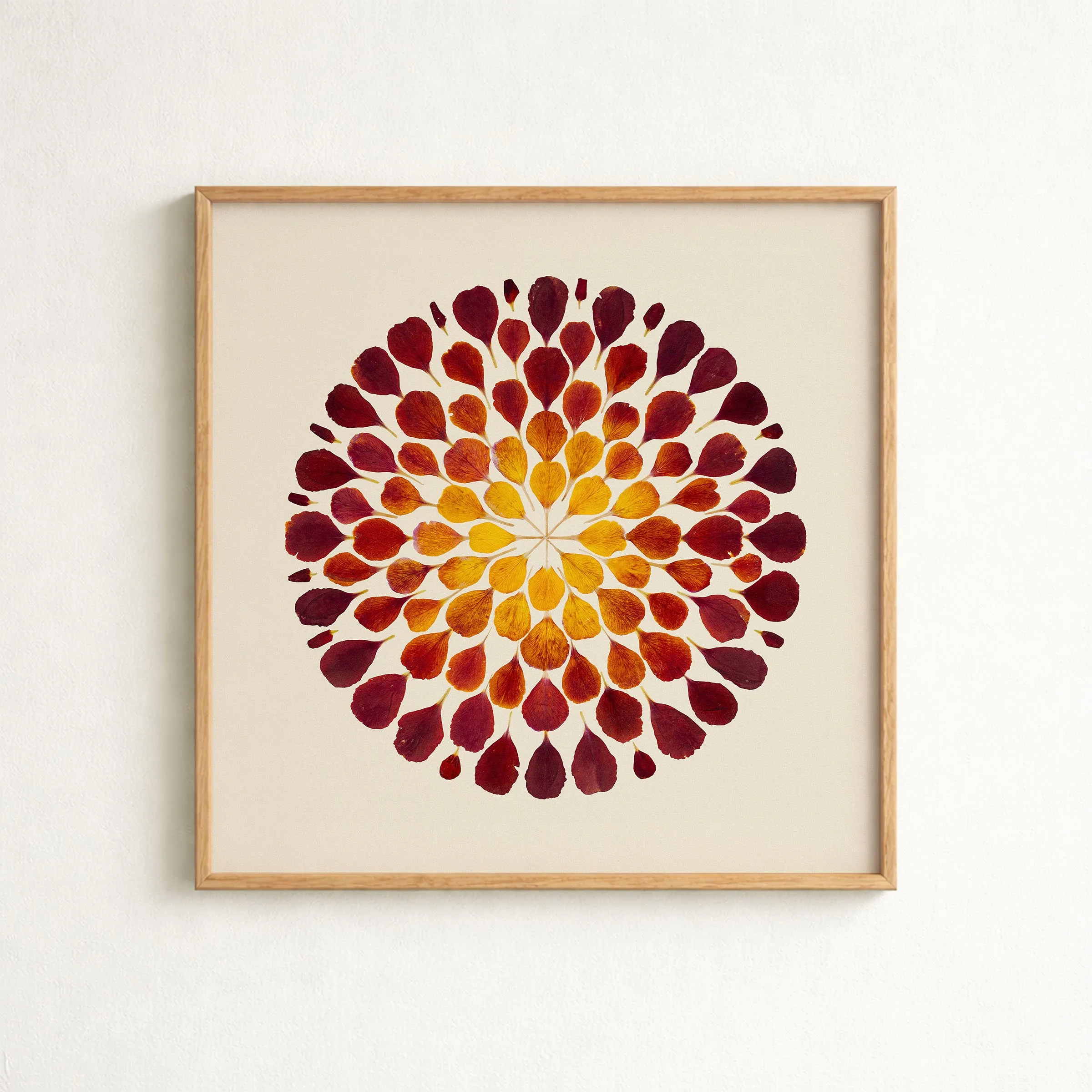
Scope No. 6: Erysimum Embers
2026
30 × 30cm (12 × 12”)
A pressed botanical composition revealing the gradients of colour and form in the petals of Erysimum cheiri ‘Fire King’, shifting from luminous yellow to deep ember red across the flowering season.
Print details:
• Museum-quality 310gsm fine art paper
• Acid-free with a warm, textured, matte finish
• Open edition, printed and signed by the artist in Oxford.
Delivery:
• Free tracked worldwide delivery for 2026
• Dispatched within 2–4 working days
Framing:
Natural oak or black veneer, made to order (UK delivery only).
Secure checkout · Major cards · Apple Pay · Google Pay · PayPal
Shipping & returns / T&C
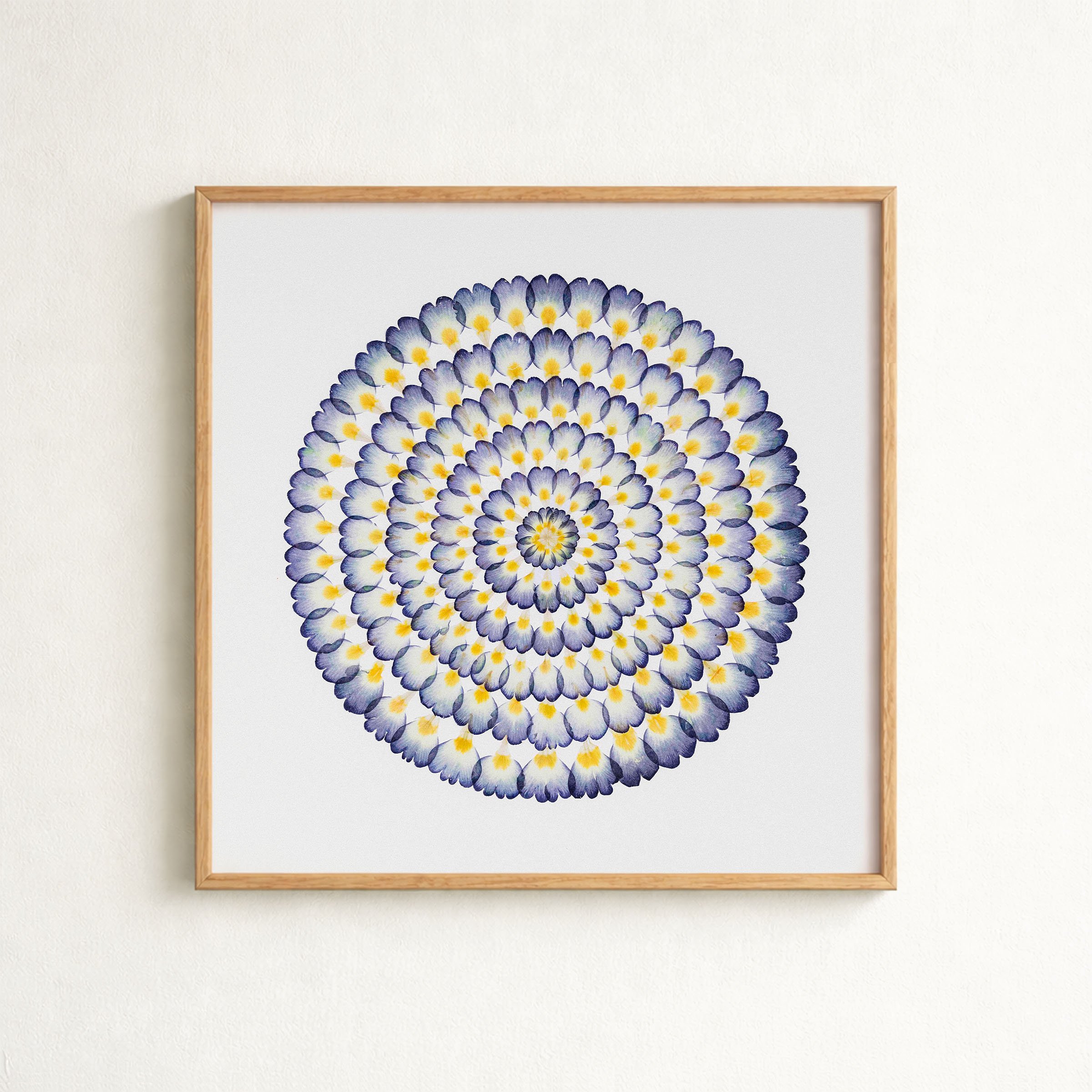
Scope No. 5: Primrose Ripples
2026
30 × 30cm (12 × 12”)
A pressed botanical composition featuring the complementary and translucent colours of Primula vulgaris 'Belarina Rhapsody' petals as they expand in concentric ripples from the centre.
Print details:
• Museum-quality 310gsm fine art paper
• Acid-free with a warm, textured, matte finish
• Open edition, printed and signed by the artist in Oxford.
Delivery:
• Free tracked worldwide delivery for 2026
• Dispatched within 2–4 working days
Framing:
Natural oak or black veneer, made to order (UK delivery only).
Secure checkout · Major cards · Apple Pay · Google Pay · PayPal
Shipping & returns / T&C